

Inverter Dyness
Importante
Importante
Attualmente, per l'integrazione degli armadi C&I con MPPT, il SOC massimo è limitato al 95% per consentire al fotovoltaico di continuare ad alimentare il carico.
Dispositivi supportati
| Device Type | Variants | Modbus TCP (Ethernet) | RS485 | Curtailment |
|---|---|---|---|---|
| DH100F | 71~100kWh | ✅ | ✅ | ✅ |
| DH200F | 100kW/215kWh | |||
| DH200Y | 100kW/232kWh | |||
| LS | ||||
| HT-A | ||||
| DH800Y | ⚠️ this feature has yet to be tested |
Cablaggio
Il SmartgridOne Controller e gli inverter Dyness comunicano tramite RS485 o Ethernet.
Ethernet
Per un cablaggio Ethernet corretto: seguire le linee guida per il cablaggio Ethernet.
RS485
Info
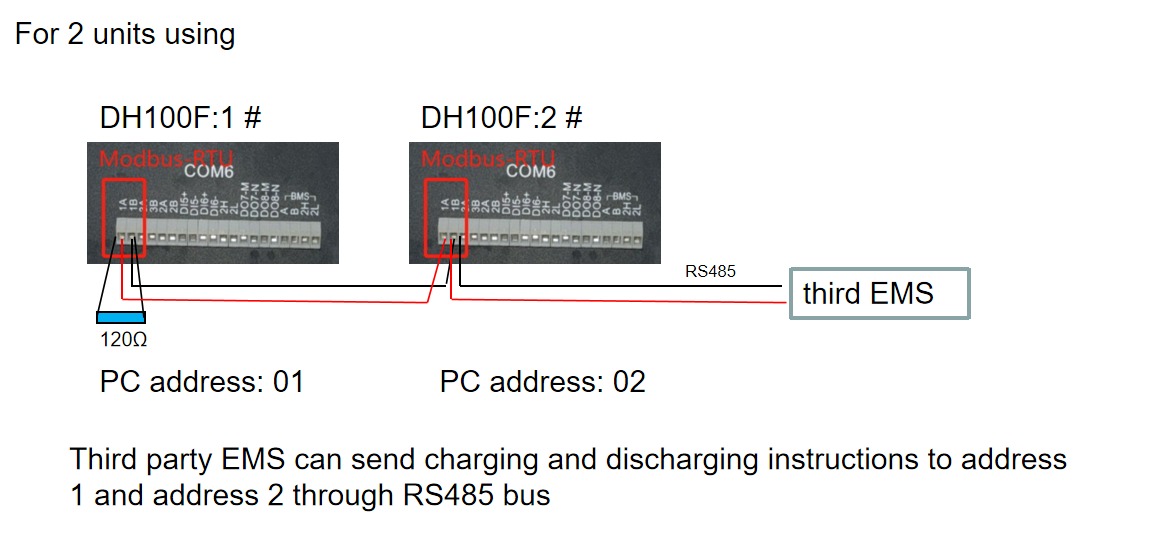
RS485 Wiring
- For correct RS485 wiring: Follow the guidelines for RS485 wiring.
- If the wiring shown in the table below is incorrect, please let us know.
- There is no general consensus in the industry about the usage of A and B for the RS485 polarity, so it may be counterintuitive and opposite of what you might expect for some devices.
| Device | SmartgridOne Controller model OM1 | SmartgridOne Controller model IG8 | RS485-USB converter | RS485-Ethernet converter |
|---|---|---|---|---|
| COM6 terminal 1A | RS485 A | RS485_POS | RS485 A | TX+ |
| Com6 terminal 1B | RS485 B | RS485_NEG | RS485 B | TX- |
| N/A | RS GND | GND | Not available | G |
Configurazione
DH100F
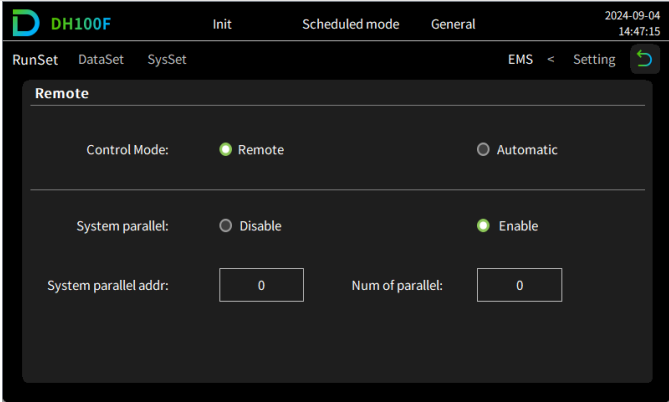
Il Dyness DH100F deve essere impostato sulla modalità remota:
- Fare clic sull'icona del menu principale nell'angolo in alto a destra dell'interfaccia principale
- Fare clic su "Data" nella barra del menu principale
- Fare clic su "EMS" nella barra del sottomenu
- Fare clic su "RunSet" nella parte superiore sinistra della barra di navigazione
- Impostare la modalità di controllo su "Remote"
Avviso
NOTE: RS485 Device Addresses
- You MUST give each device on the RS485 bus a unique address. Check the manual of the device on how to do this.
- Use lower addresses first (1, 2, ...) because the SmartgridOne Controller will find them faster!
- For each device, it is generally recommended to stick with the factory default baud rate, parity, and stop bits. The SmartgridOne Controller will scan on those first.
Last updated August 24, 2026Edit this page